
Community pharmacies at "breaking point" and at risk of closure due to spiralling costs
Calderdale will have fewer community pharmacies in future unless more funding is made available from the NHS.
That is the warning from pharmacists, who say they are struggling to stay open due to receiving less money from the NHS for the medicines they sell.


The National Pharmacies Association says around two-thirds of pharmacies in England in 2025 operated at a loss, and it is thought that two pharmacies close in England every week.
Shaiyan Wirasat, who owns Ramzy's Pharmacy in Hipperholme, says real-terms funding from the NHS has decreased over recent, whereas other costs for running pharmacies, in particular medicine costs, staff costs and general overheads, have increased.
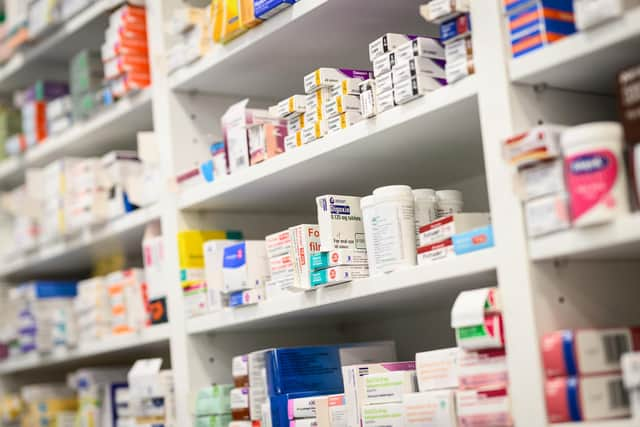
"The biggest cost is the medicine cost, which has spiralled quite a lot," he said.
"There are some medicines that we dispense at a loss.
"For example, aspirin tablets, which can be used as a painkiller but also for cardiovascular reasons to thin the blood, recently the country ran out of them.
"When aspirin came back available, it was coming back in at very, very expensive prices.
"We used to sell a pack of 28 for two pounds and we were getting it in for three pounds, but because we didn't want to pass that cost onto the customer, a lot of pharmacies thought they'd take a loss on it.
Shaiyan says one way pharmacies have tried to recoup money is by offering extra services.
"What the NHS do is instead of giving us extra profit on medicines, they've taken that percentage back down and are giving that same money in a different way, but to get that money, pharmacies are having to offer lost of extra services, like the Pharmacy First service, where you treat infections, or blood pressure checks," he said.
"The NHS are making pharmacies work harder and provide more NHS services like flu jabs or Covid jabs, to recoup some of the money we used to get from medicines.
"It's not ideal. Our main bread and butter is prescriptions and medicines, but because some pharmacies are so busy with that, they don't have a lot of time to offer these extra services, so all their costs are going up but the reimbursement from the NHS has declined."
Prashanth Takkallapally, pharmacist director at Heath Pharmacy in Halifax, said: "Community pharmacies across West Yorkshire are at a breaking point.
"Despite last year’s funding uplift, a staggering £2 billion annual deficit remains, leaving local owners in a very financially difficult position.
"The national pressures survey has shown that nearly half of pharmacy owners have been forced to use personal savings or remortgage their homes just to keep their doors open.
"As local pharmacies struggle to survive, patients risk losing reliable access to essential medicines and clinical advice.
"With the April 2026 National Living Wage increase and rising operational costs swallowing previous funding, the government’s goal of moving care closer to home is under threat.
"We need a long-term plan and a funding model that reflects the true cost of care.
"Pharmacy owners should not be personally subsidising the NHS and this will lead to more closures and therefore worsen care locally to patients."
Tahir Hussain, from Luddendenfoot Pharmacy, has been a phramacist for over ten years.
"We've definitely seen a decline since we took over," he said.
"When it hits your own pocket you tend to feel it a bit more in terms of drug acquisition prices and what the NHS pay for dispensing a prescription.
"Luckily we're not struggling in terms of cash flow but I've heard from other pharmacies where they've had to decline dispensing a prescrition because they're dispensing it at a loss.
"Since the pandemic, there's been a lot of essential medications like antibiotics where what we would get them in for, we wouldn't get back from the NHS but we have to for our patients in terms of managing an acute infection or something like that.
"We've had to make some difficult decisions and work extra hours, we're managing our overheads as much as we can."
Tahir says indpendent pharmacies play a vital role in their communities.
"There have been internet pharmacies popping up, which are hubs for just dispensing prescriptions, but we're far more than that, we're there to give advice, provide solutions for minor ailments," he said.
"You've seen a lot of pharmacies, even large branches like Boots and Lloyds, close or make difficult decisions.
"There needs to be proper funding. The worry is that pharmacies will get left behind.
"But phramacies have knowledgeable healthcare professionals who can provide a lot of advice.
"But if someone does come in for advice and it maybe takes 15, 20 minutes in a consultation but you're not getting reimbursed for that, it's tricky to say the least."
Shaiyan believes there is "no question about it" that people will see fewer pharmacies in their communities in future.
"MP's have been debating the pharmacy crisis and are trying to bring it to the government's attention that it will become a crisis," he said.
"Lloyds had around one thousand pharmacies and left the market completely, and sold all their shops, and many of those closed.
"Boots, in the last two or three years, have sold hundreds of branches and have closed branches as well.
"The smaller, independent, community pharmacies are absolutely struggling, some are at the end of the line, because it's just too difficult.
"There's no doubt in the future, if something doesn't improve, that more will close.
"The only reason some are surviving, including us, is because we offer so many services.
"On our website, we offer one hundred services, which is how we make our money.
"There's not any money in medicines, so there is a major risk, no question about it."
Nicola Goodberry Kenneally, chief executive officer at Community Pharmacy West Yorkshire, said: "Community pharmacies across West Yorkshire are under intense financial and operational pressure, and many are now genuinely struggling to survive.
"Rising costs and an independently assessed £2 billion annual funding gap have left most pharmacies in a position that is simply unsustainable, even after last year’s uplift.
"We are seeing the impact locally. Independent contractors in West Yorkshire are facing severe economic strain, and some are now at real risk of closure.
"Last year’s national pressures survey showed that nearly half of pharmacy owners had been forced to remortgage their homes or use personal savings just to keep their doors open. That reflects the reality for many pharmacy owners here who are doing everything they can to continue supporting their communities.
"These pressures are already affecting patients. When pharmacies struggle, access to medicines, clinical advice and frontline care becomes less reliable. In areas across West Yorkshire, where many communities rely heavily on their local pharmacy, this poses a serious risk to health outcomes and to the NHS ambition to deliver more care closer to home.
"A stable and sustainable community pharmacy network is essential for the region. Government now needs to set out a clear long-term plan and implement a funding model that reflects the true cost of delivering modern pharmacy services.
"Pharmacy owners should not be personally subsidising NHS care. They need the financial security to continue supporting patients, invest in their teams and plan for the future."
The Department for Health and Social Care has been contacted for comment.