
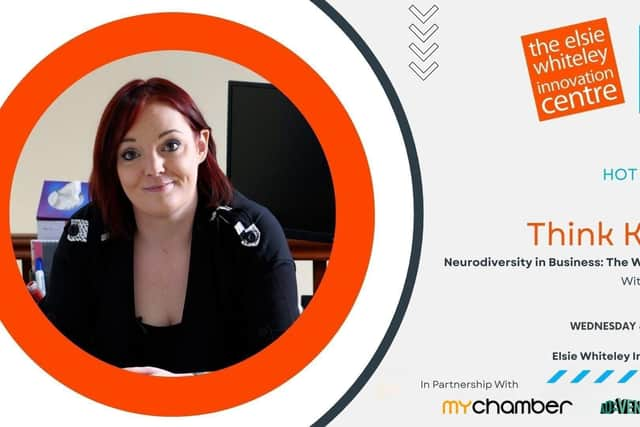
Halifax Opportunities Trust sits down with Kathleen Helm to talk Neurodiversity in Business!
As ADHD Awareness Month begins, conversations around neurodiversity are moving from the margins to the mainstream — in tribunals, government priorities, and boardrooms alike. Ahead of their talk at HOT Networking, we sat down with trainer and coach Kathleen Helm to hear their take on what neurodiversity really means for workplaces today. Kathleen joins us at our HOT Networking event on Wednesday 8th October, 8 am-10am for Neurodiversity in business: The What, Why & How
What does “neurodiversity” really mean?
Kathleen: Essentially, neurodiversity is the diversity of human brains. Often, when we hear about neurodiversity it’s in relation to Autism, ADHD and Dyslexia – but neurodiversity is much broader than that. I go into this more in my talk on the 8th, but fundamentally neurodiversity (and the neurodiversity movement) is about respecting that there is no one “correct” way to think, feel or act and that variation is natural and we should embrace that and create classrooms, workplaces and a society where every type of brain can thrive.
Why should businesses prioritise neurodiversity right now?

Kathleen: Honestly, because the world is paying attention. Awareness has exploded over the last few years, you only have to look at the fact that references to neurodiversity in UK job adverts have gone up about six-fold since 2019. It’s also showing up more and more in tribunals, which tells you something important: people aren’t just aware, they’re expecting workplaces to get this right, and they’re willing to challenge if they don’t. Even the government has started putting more focus on it.
But it isn’t just about avoiding risk. When neuroinclusion is done right it pays dividends.
Acas found that neuroinclusive organisations had a staff turnover averaging around 8% rather than the national average of 34%. Harvard Business Review found that neurodiverse teams are up to 30% more productive.
And the companies that make these adjustments have higher satisfaction and productivity across the whole team, not just the neurodivergent colleagues. Because the things that help neurodivergent brains – greater flexibility, choice and clarity in how we communicate, psychological safety, workplace technology – are good for everyone!
It’s good business sense. Neuroinclusive companies attract more talent, keep that talent, have happier staff, benefit from more diverse thinking and ultimately, end up with an environment where work actually works better for everyone.
To read more about what Kathleen had to say to Halifax Opportunities Trust go to : Guest Blog - Questions On Neurodiversity With Kathleen Helm - The Elsie Whiteley Innovation Centre
You can also sign up to our next networking event where Kathleen will be discussing the topic of neurodiversity in business , to sign up to the networking event go to: HOT Networking Registration - Intellistack