
Ryburn Valley High awarded best Breakfast Club in the North of England
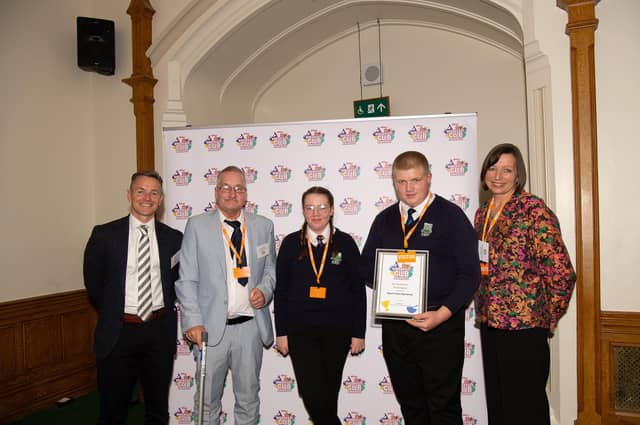

Ryburn Valley High has been crowned best Breakfast Club in the North of England, for its continued efforts in supporting its pupils in the morning to ensure they have access to a filling breakfast.
The Breakfast Club at Ryburn Valley High School is an inclusive space that offers far more than a morning meal. It provides a safe, welcoming environment where children from all backgrounds can start their day right.
The school’s win was announced at the Kellogg’s Breakfast Club Awards at the Houses of Parliament. Now in its 14th year, the awards celebrate breakfast clubs up and down the country, and the teachers and support staff, who go above and beyond to help their students start their day fuelled and ready to learn every school morning.
Alongside Ryburn Valley High, seven other schools were crowned regional winners, each attending the ceremony to receive their awards alongside a £1000 cash prize to spend however they need to support their breakfast club.
A panelist of specialist judges, which includes Roisin Currie CBE, CEO of Greggs, Shirine Khoury-Haq, CEO of Co-op, Professor Greta Defeyter OBE and Andrew Ranger, Wrexham MP carefully selected the winners from nearly 500 applications.
This year’s awards were hosted in the Houses of Parliament by Andrew Ranger, Wrexham MP, with representatives from the Department for Education, The Royal Foundation, Forever Manchester and Morrisons attending.
Kate Dearden, Halifax MP, said: “I’m delighted that Ryburn Valley High in my constituency has won the award for best Breakfast Club in North England at this year’s Kellogg’s Breakfast Club Awards. The breakfast club is a brilliant example of the importance and positive role these clubs have on children and parents. Now more than ever, it's vital we recognise the work of breakfast clubs, to ensure our young people start the day fuelled and ready to learn while also addressing the root cause of child poverty and food insecurity."
Andrew Ranger, Wrexham MP said: “I’m thrilled to have hosted Kellogg’s Breakfast Club Awards at the Houses of Parliament again this year. It was an honour to spend time talking to each winning school and hearing about what and who makes their club so special.
‘’Breakfast Clubs are so much more than just free food. They provide a lifeline for so many children and parents, providing a welcoming and inclusive environment. So, it is now more important than ever that we celebrate and support the work that is being done at hundreds of clubs across the country.”
Andrew Ridge, Social Impact Lead at Kellogg’s said: “We’ve been supporting breakfast clubs for nearly 30 years, so we understand the important role they play for families. Our own research shows an increased demand in recent years, with almost double the amount of children visiting a breakfast club every day in 2025 vs 2023*.
“The positive impact these clubs have on children is made possible by the passion and commitment of the teachers and volunteers behind them. That is why, every year, Kellogg’s is privileged to honour the amazing work that breakfast club leaders, teachers, and everyone involved, do every day to help make the clubs so special.”
This year, the awards featured a ‘Breakfast Club Hero’ category, to celebrate the individuals who go above and beyond to support the running of their school breakfast club. Seth Greaves a pupil at Whitmore High School was crowned as Breakfast Club Hero 2025. He was nominated alongside an emotional support dog from North Lincolnshire, a school caretaker from Northern Ireland and a team of Year 5 and 6 students from Merseyside.
New for this year, in partnership with the Department for Education (DfE), Kellogg’s has also introduced a Free Breakfast Club Programme Early Adopter Award to celebrate the schools pioneering the rollout of breakfast clubs across England. This was awarded to Brookland Farm Primary School in Milton Keynes.
*Up from 10% to 18%. Research for the report Hungry to Learn: The impact of morning hunger on our schoolchildren was undertaken by Spark between 30 January 2025 and 20 February 2025. 2,000 participants from a Nat Rep audience, in addition to 867 teachers.