
Ted Hughes: Solar panel plan for former home of famous Calderdale poet
Plans have been submitted for 30 solar panels at the former Heptonstall home of late poet laureate Ted Hughes.
The application asks Calderdale Council for permission for the ground-mounted panels at the Arvon Foundation, Lumb Bank.
A supporting statement with the application says the photovoltaic panels will be mounted on a low-profile, adjustable galvanised steel framework.
According to the Arvon Foundation, Lumb Bank was once owned by Ted Hughes and became part of Arvon’s network of residential writing centres after he made it available for the charity’s work.
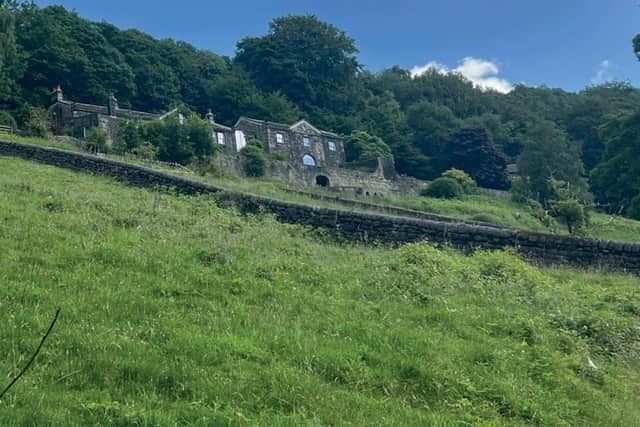

The 18th-century house, set in the upper Calder Valley landscape that inspired much of Hughes’ poetry, has since helped generations of writers develop their craft through Arvon’s courses and retreats, making it one of the most enduring parts of his literary legacy in Calderdale, says the foundation.
It adds the array has been designed to generate a significant proportion of the site’s annual electricity demand while occupying the minimum practical area of land.
“The adjustable mounting system enables seasonal optimisation of panel inclination, improving energy generation efficiency and reducing the number of panels required compared with a conventional fixed installation.
“The photovoltaic array forms the final stage of the Arvon Foundation’s wider de-carbonisation programme, following investment in building refurbishment, improved thermal performance, air source heat pumps and mechanical ventilation with heat recovery.
“Together, these measures will reduce the Foundation’s reliance on imported grid electricity and further lower its operational carbon emissions,” says the statement.
The array would not normally be allowable for land in the green belt but very special circumstances as required by policy are demonstrated, the application says.
An independent audit has identified a south-facing photovoltaic array as the most effective measure for reducing the site’s operational carbon emissions and electricity consumption.
It “will deliver significant environmental, operational and public benefits through renewable electricity generation, reduced carbon emissions and improved energy resilience.
“These benefits, together with the proposal’s modest scale, careful design and contribution to the Foundation’s wider de-carbonisation strategy, clearly outweigh the limited harm to the openness of the green belt,” says the supporting statement.
The proposed solar array will be located within a managed grass field to the south west of the existing buildings and down slope from the main complex, it says.
Existing topography, mature trees, hedgerows and drystone walls will restrict views of the array from the road and nearby public rights of way, whilst the dark, anti-reflective finish further reduces visual prominence, argues the application.