
Community gardening group keeps plants thriving despite drought and hosepipe ban
Despite a drought and hosepipe ban in Yorkshire, a community gardening group has managed to keep its plants thriving throughout the summer.
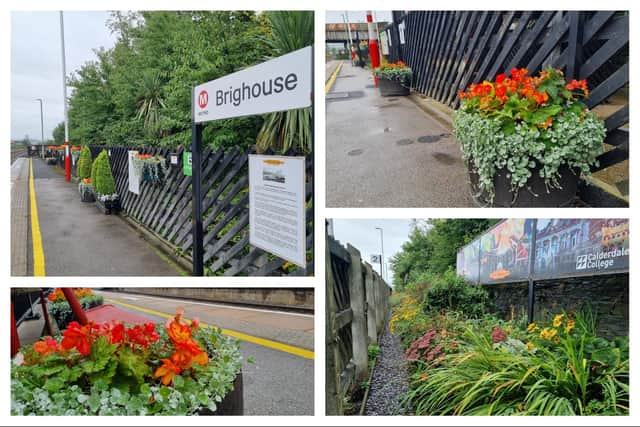
Friends of Brighouse Station (FoBS) – a group of about 60 people – has installed and looked after the fence planters, barrel planters and plant beds at Brighouse railway station since forming in 2015.
As with other gardening groups, its members have faced challenges posed by the exceptionally warm and dry spring and summer the country has experienced this year.
Normally, the group relies on accessing a hosepipe from the funeral home on its Platform 2 side.

Following the hosepipe ban imposed by Yorkshire Water in July, however, the group has been unable to rely on this water source.
Norman Hodgson, a senior volunteer at FoBS, said that the group has managed to save some water, however, via a water system designed to capture the occasional rainfall we have had this season.
This is done via a drainpipe system attached to the Station Cafe – adjacent to Platform 1 – which directs rainfall from the roof into two large barrels, ready to be used by the volunteers.
Paul Marshall, Chair of FoBS, described other ways the group has worked around the dry weather.
He said: “We realised that some of the plants that we put in were drinking a lot of water, so we actually took drastic action and cut them right back.”
By making the plants smaller, they required less water, and consequently were able to thrive despite the dry season.
Paul said the group saved “70 per cent of the water by doing that.”
The group has also planted Geranium this year, which requires less water than some other plants, and which has been flowering at the station since May.
Across both platforms, the group has several fence and barrel planters – most of them sponsored by local businesses – which are self-watering.
Each planter contains a reservoir capable of holding six pints of water, which has meant the group has not had to top them up, allowing the plants to thrive on their own despite the dry weather.
Paul said the self-watering planters are a “great aid to plant growth” and make the plants “grow much better and more evenly.”
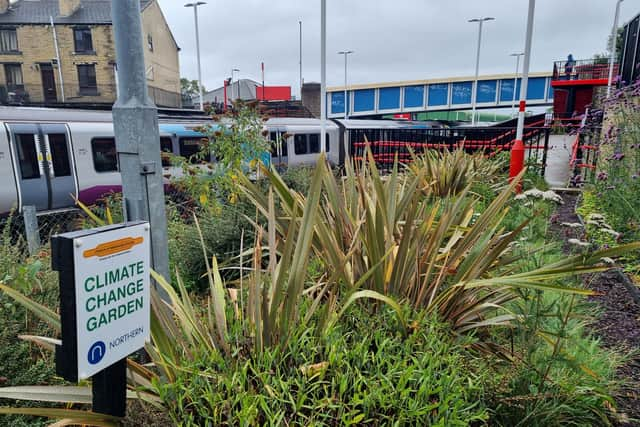
In 2023, the group unveiled its Climate Change Garden, which is a long plant bed at one end of Platform 2.
It was designed to be essentially self-sufficient, saving water, time and labour – in part because of the underground cables which would prevent the group from digging up the soil again once everything was planted.
It contains bee-attracting lavender, and drought-tolerant plants such as Primula, Phormium, Photinia, and wildflowers.
This prairie-style planting is not as colourful as the plants typically seen in train station planters, but could be a solution to gardening in increasingly hot and dry summers.
Despite this, Paul said the prairie gardening style can still be visually pleasing: “You can get some nice coloured grasses and fronds that wave about in the wind.”
Referring to the Climate Change Garden, he added: “Everything is thriving in there.”
Provisional figures from the Met Office have revealed this summer to be the hottest since records began in 1884, with the UK’s mean temperature from June 1 to August 31 standing at 16.10C.
There were also four heatwaves this summer, and last spring was the driest in more than 100 years, with England recording 42 per cent of its average rainfall in August.
The Met Office said dry spring soils, warmer seas around the UK, and high-pressure systems have meant that heat has built quickly and lingered.
It added that a summer temperature as high as 2025 has been made 70 times more likely because of human induced climate change.
June saw Yorkshire enter a state of drought, with Yorkshire Water imposing its hosepipe ban in July.
The original Brighouse Station opened in 1840, and has been reopened three times since, with the current station recently celebrating 25 years since opening.
A refurbishment carried out between June and August has seen the station newly painted and modernised – including the installation of CCTV cameras, floodlighting, and digital arrival and departure screens – and repairs have been made to the steps, ramps and railings.