
“It does worry me”: How a community gardening group is coping with its driest season ever as Yorkshire Water hosepipe ban continues
A community gardening group has expressed concern over the lack of rainfall this year.
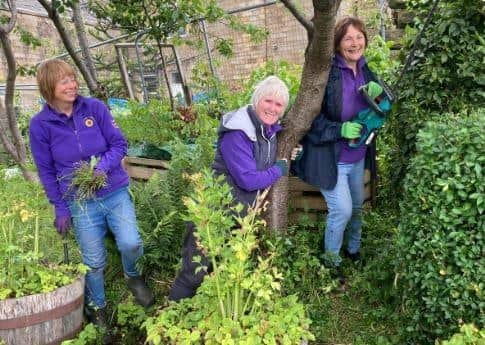
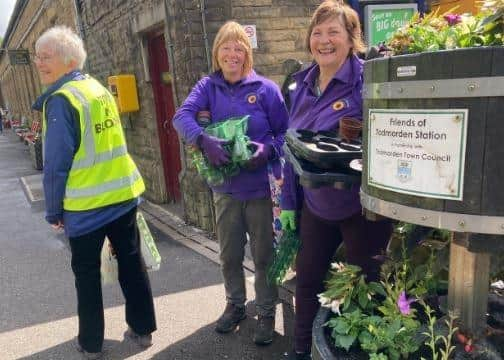
Todmorden in Bloom (TIB) is a small voluntary group which formed more than two decades ago.
It looks after hanging baskets and pocket gardens around the town, as well as the Todmorden and Walsden railway stations.
Last year, it won gold at the Royal Horticultural Society’s (RHS) Britain in Bloom awards, and is currently waiting on results for its entry in this year’s regional competition – Yorkshire in Bloom.

This year, however, the group has faced problems caused by the exceptionally warm and dry summer, which itself has followed the driest spring on record.
Sheila Greenwood, TIB’s chairperson, said the group is “limping on until the end of the season.”
Although geraniums around the town have thrived in the hot and dry conditions, Sheila said some plants, such as the dahlias, need damper conditions.
Sheila has volunteered with TIB for 26 years. When asked if she has ever seen such extreme conditions, Sheila said: “No, never.”
Throughout her time with TIB, she has observed the conditions getting progressively worse.
“It does worry me,” she added.
The six months to July were the driest since 1976, and July was the fifth warmest on record.
Continually hot and dry summers could not only make maintaining the group’s plants increasingly difficult, but drastically change the look and style of gardening in Todmorden and other towns.
“About 15 years ago, there was a prediction that we would have hot, dry summers, so we did quite a bit of prairie planting,” Sheila said.
In contrast to the colourful planters and hanging baskets the group nurture year-round, prairie planting has a stronger focus on grasses.
It is less colourful, but can cope better in dry conditions.
On how prairie planting would be different to the gardening style most In Bloom groups currently employ, Sheila said: “You are going to have a totally different look in your town centre if you can’t maintain the plants – there’s no point having them if they’re not going to thrive.”
Sheila said shifting to prairie planting would lead to a loss of colour in the town, which she said is not only visually impactful but mentally uplifting, particularly for people with mental health conditions.
“I don’t think your town centres would look as welcoming,” she added.
Firmly rooted within the Todmorden community, Sheila said residents take an interest in the outcome of the the gardening group’s RHS competition entries, asking volunteers ‘how have we done?’, which Sheila said is “one of the nicest things.”
To help the group’s plants thrive this year, TIB is asking any residents to top up the baskets and planters around the town with any grey water they can save at home.
The group – made up of between 12 and 20 volunteers, depending on the project – gardens 50 weeks out of the year, with volunteers out working twice a week during summer, and once a week during winter.
Yorkshire is currently in a state of drought after the driest spring on record.
Yorkshire Water imposed a hosepipe ban earlier in July to help reservoir levels recover, which remains in place despite intermittent rainfall over the last few weeks, which the water company said “has not been enough to improve reservoir stocks after six months of below long-term average rainfall in Yorkshire.”
Although the ban restricts the use of hosepipes, people are still permitted to use water from a watering can, grey water, or rainwater from a water butt.
Yorkshire Water has been donating water butts to RHS In Bloom groups across the country, to help them make the most of rainwater when it does occasionally fall.
Emma Rattigan, water efficiency manager at Yorkshire Water, said: “Water butts are a great way to catch precious rainwater from going down the drain as it's redirected into the container.
"It’s important that we all do our bit to save water where possible to put the hosepipes away and use greywater to help protect the environment and keep reservoirs topped up.”
Last week, the National Drought Group said the current water shortfall situation in England was a “nationally significant incident.”
During a meeting of the group in August, Yorkshire Water reported a 10 per cent reduction in domestic demand as a result of the hosepipe ban – equivalent to 32 Olympic-sized swimming pools.
In the first half of August, reservoir levels were 67.7 per cent full on average across England – the average for the first week of August is 80.5 per cent.
Alongside Yorkshire, other areas also in a state of drought are Cumbria, Lancashire, Greater Manchester, Merseyside, Cheshire, East Midlands, and West Midlands.
Other areas in the country are currently in the phase before drought – known as prolonged dry weather – which includes the Northeast, Lincolnshire, Northamptonshire, East Anglia, Thames, Wessex, Solent and South Downs.