
Family of woman who died from fatal blood clot call for urgent reforms in NHS communication practices
The family of a 29-year-old woman from Queensbury who died from a fatal blood clot in September 2024 is calling for urgent reforms in NHS communication practices.
The family says their appeal follows a critical failure to share vital information about her condition between NHS 111 and the A&E department at Dewsbury and District Hospital, which could have helped to prevent her death.
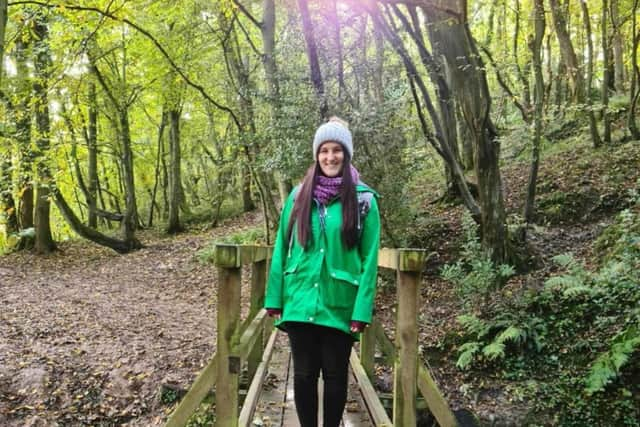

On August 31 last year, Chloe Ellis had used the NHS 111 online assessment service after experiencing chest and back pain and breathlessness.
Based on her described symptoms and medication history, the 111 algorithm identified a suspected pulmonary embolism, a blood clot blocking the blood supply to her lungs.
The 111 service then advised Chloe to go straight to a local emergency department.
Crucially, this risk assessment was not communicated to Chloe, nor was the information made available to the medics who treated her at Dewsbury and District Hospital.
Chloe was unfortunately misdiagnosed with a respiratory infection and discharged from hospital.
Sadly, Chloe collapsed at the home she shared with husband, Dan Ellis, 31, three days later on September 3.
In spite of the efforts made by medical staff to treat Chloe, she died later that day at Leeds General Infirmary.
At Chloe’s inquest, held at Wakefield Coroners Court on June 9, Coroner Oliver Longstaff concluded that failure to obtain Chloe’s full medical history at A&E, combined with the inaccessibility of her 111 online assessment, likely cost Chloe her life.
The Coroner concluded that had staff known about the medication she was taking, Chloe should have been diagnosed with a pulmonary embolism, and would have received life-saving treatment.
He went on to issue a Prevention of Future Deaths report to West Yorkshire Integrated Care Board (ICB) in which he raised concerns that the outcomes of NHS 111 online assessments should be accessible to emergency department clinicians.
Previously, West Yorkshire ICB has not commissioned accessibility to NHS 111 online assessments for local hospitals.
Throughout the UK, practice varies as to whether NHS 111 assessments are shared with A&E departments.
Chloe’s family are now campaigning for it to become standard practice, and say it could save lives. Chloe’s mother, Jean Walker, said: "Chloe did everything right. She sought help and gave accurate information to the NHS 111 call handler.
"111 identified a condition that can be fatal if left untreated, yet that information wasn’t shared with anyone, not even Chloe, so not only was this assessment not passed on to clinicians at A&E, even Chloe wasn’t able to communicate this herself.
"Had this vital information been shared, she would have received treatment that would have undoubtedly saved her life.”
In Chloe’s memory, a group of friends and family known as The Dozy Wanderers, have undertaken a 213-mile fundraising walk from Ingleborough to Scarborough in aid of The Yorkshire Wildlife Trust, where Chloe worked as a planning advocate.
Dr Mark Freeman, Deputy Chief Medical Officer at Mid Yorkshire Teaching NHS Trust, said: “We send our sincere condolences to Chloe’s family and friends and continue to work alongside West Yorkshire ICB as it reviews the issues raised by the coroner.”