
Halifax man to run Greenland’s polar ice cap during 14-marathon year for Pancreatic Cancer UK
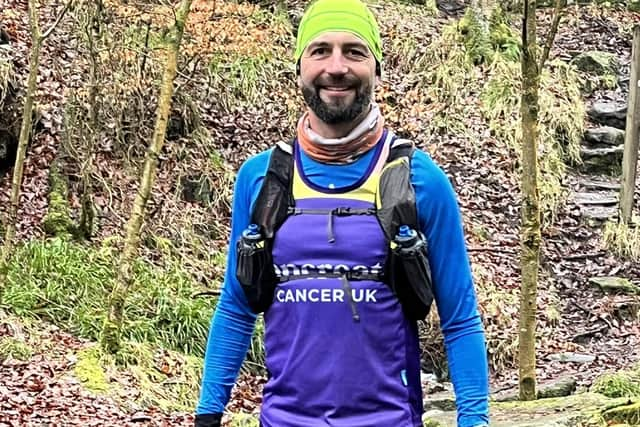
A man from Halifax will complete at least one marathon or half-marathon each month in 2026, including two on a polar ice cap in Greenland, for charity Pancreatic Cancer UK
Inspired by his colleagues who have been affected by the deadliest common cancer, the money Oli Burbage-Hall raises will go towards vital research into early detection and new treatments for the disease.

Just three days after Oli started his senior role at a local Citizens Advice office in January 2024, his predecessor passed away from pancreatic cancer.
Last year, Oli learnt that two more people in his team had been diagnosed with cancer. One colleague was diagnosed with breast cancer, but it was thankfully caught in time for treatment, and she has since returned to work. The other colleague was diagnosed with pancreatic cancer.

Oli, 49 said: “When she felt unwell, she pushed for tests. She had blood tests, but nothing was flagged. Fortunately, she persisted, and a scan soon confirmed her diagnosis. She has been able to start treatment, and it was because she was aware of pancreatic cancer and its symptoms.”
Oli already planned to celebrate turning 50 in September with The Polar Bear Challenge the following month - a marathon and half-marathon on successive days in Greenland – but after hearing the news of his colleague, he wanted to do something for his team.
He spoke with his colleague about fundraising on her behalf and she nominated Pancreatic Cancer UK after she received support from its team of specialist nurses.
Oli said: “After being dealt with a dreadfully unfair hand, she and the team have acted with such bravery and compassion. I know I wanted to do something immense for them.
“The Polar Bear Challenge will be tough - two races in sub-zero temperatures won’t be easy – but I have started preparing with ice baths, and the excitement of being in Greenland should help.”
Oli plans to take on 14 races during 2026, kicking off in West Yorkshire with The Hebden on Saturday, and Rombalds Stride on February 7, a 22-mile, and 23-mile run, respectively.
Oli said: “I hope to raise awareness of pancreatic cancer and its symptoms through each challenge I take on. My colleague was diagnosed early because she had prior knowledge of the disease and acted. If more people had this knowledge, maybe more could survive a diagnosis.”
Oli will complete more than one run in April, taking on the 20-mile Giant’s Causeway race and the London Marathon ‘My Way’ overnight. He will also complete two runs in May, when he will tackle the Apocalypse Ultramarathon in Shropshire and then a bonus challenge finishing his first ‘Parkrun alphabet’ with Zamek w Malborku Parkrun in Poland.
Oli said: “The ultramarathon makes me most nervous. I’ve done one and managed 33 miles, but I picked up a small injury. Years before, I tore cartilage in my knee and thought I’d never run again, so any niggles worry me now. Thankfully, a friend encouraged me back into running and I regained my confidence. I’m just hoping my preparations will keep any injuries at bay this time!”
Pancreatic cancer is the deadliest common cancer; more than half of people die within just three months of diagnosis. In stark contrast to the welcome progress made in outcomes for many other types of cancer, survival for pancreatic cancer has barely improved in 50 years. Vague symptoms – including persistent indigestion, back or tummy pain, unexpected weight loss and changes to poo – mean the disease is difficult to diagnose at an early stage, when it’s most treatable. There are currently no screening programmes or early detection tests to help doctors, resulting in 80% being diagnosed too late for lifesaving treatment.
Pancreatic Cancer UK is taking on this devastating disease by investing in ground-breaking research to transform survival, and by supporting patients and their loved ones through its free-phone Support Line, staffed by specialist nurses. The charity campaigns and fundraises to drive forward desperately needed progress and to raise awareness of the symptoms so that more people can be diagnosed early enough for treatment.
Kerry Thomas, Head of Public Fundraising at Pancreatic Cancer UK, said: “We are incredibly grateful that Oli is supporting his team by fundraising for our charity throughout his formidable year. We would like to wish him the best of luck.
“Tragically, 80% of people with pancreatic cancer are diagnosed too late to receive surgery, which is currently the only potentially curable treatment. For decades, pancreatic cancer has been overlooked, underfunded, and left behind. Families are often left with only hope to hold on to, but they deserve more. The funds raised by Oli will help us support those affected by pancreatic cancer, invest in research to see the breakthroughs we urgently need, and be a voice for everyone impacted by the deadliest common cancer.”
You can see a breakdown of Oli’s planned challenges for 2026, and donate, at https://fundraise.pancreaticcancer.org.uk/fundraisers/olifax.