
"If something feels wrong, you need to act," warns former Halifax footballer on Stroke Prevention Day
Former Halifax Town footballer Marc Lloyd Williams had always considered himself fit and healthy.
So when his blood pressure was found to be high one afternoon in November 2016, aged just 43, he didn’t think it was anything to worry about.
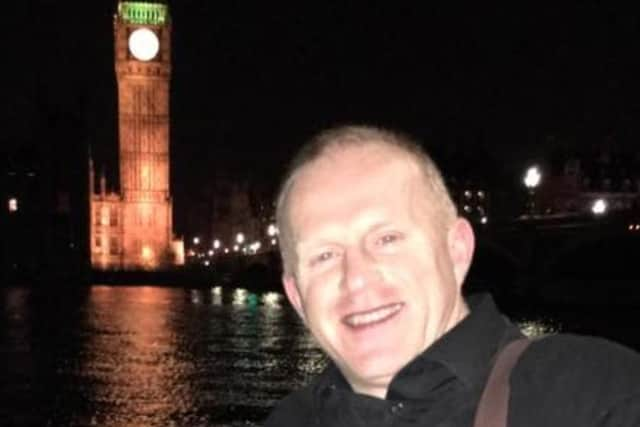

“I’d been active all day,” says Marc, who played for Halifax in the late 1990s. “I thought the high reading was just because I’d been exercising. I didn’t follow it up – and that was my mistake.”
Later that day, Marc noticed weakness in his right arm. Despite recognising it as one of the signs highlighted in Act FAST campaign, he convinced himself it was nothing serious.
“My speech was fine, so I didn’t think it could be a stroke,” he says. “You tell yourself the warnings are for other people.”
It was only when his wife insisted that Marc seek help that he made the call. Paramedics arrived quickly, and Marc was taken to hospital for urgent treatment.
Now, Marc says his experience shows why stroke prevention and symptom awareness matter for everyone – regardless of age or fitness.
“High blood pressure doesn’t care who you are,” he says. “And the FAST signs don’t always come all at once. If something feels wrong, you need to act.”
Nearly ten years on, Marc is preparing to run the 2026 London Marathon to raise funds for the Stroke Association and awareness that stroke can happen to anyone.
“Act FAST saves lives,” he says. “I wish I’d acted sooner. If sharing my story makes someone else stop and get their blood pressure checked, it’s worth it.”
The Stroke Association wants the Government to take further steps to prioritise prevention of both first and recurrent strokes as Lesley experienced. This is in addition to delivering the preventative measures outlined in the 10 Year Health Plan including new alcohol labelling, reduced junk food advertising, expanding the ‘sugar tax’ on soft drinks, improved access to weight loss medication, prohibiting sales of cigarettes to young people, and increasing taxes on vaping.
The charity is also urging more people to attend the NHS health checks for people over 40 in England and Wales, as currently around two-thirds of those invited to an appointment don’t attend3. It also wants the Government to reform the appointments, so they are more effective and provide targeted support for people who need it, including education on the risk factors of stroke. This is especially for people with high blood pressure, which is checked at these appointments, and in underserved communities which are impacted by health inequalities.
Follow-up from these health checks also needs to be coupled with support for stroke survivors as one in four will go on to have another stroke. As two thirds of stroke survivors are also left with life-changing disability, ongoing rehabilitation must focus on their individual requirements.
Juliet Bouverie OBE, CEO of the Stroke Association, said: “As the nation’s health declines, the risk of stroke rises. The risk factors of stroke are silent killers as there’s a real lack of awareness about how smoking, poor diet, drinking a lot of alcohol, and not getting regular exercise causes high blood pressure and therefore stores problems up for later life. Already one in four people who have a stroke are of working age. Without preventative action, alongside improvements to stroke treatment, care and recovery, this will only get worse.
“The Government has set itself a target to reduce cardiovascular and stroke deaths by 25 per cent over the next decade and we must also reduce the avoidable disability which many stroke survivors are left with. This is possible when there’s a real focus on preventing both primary and secondary strokes. NHS health checks are a perfect point of contact for this – and are a cost-effective option when public budgets are so thinly stretched. With affirmative action, we can stop the number of people having strokes from spiralling even further out of control.”
Recent data shows that the risk factors of stroke in adults are showing little sign of abating.
Nearly 414 people will have a stroke every day in the UK – that's one person every three and a half minutes – by 2035 unless the public, NHS, and the Government tackle prevention, the Stroke Association is warning on what is Stroke Prevention Day.
The Stroke Association is expecting the number of people having a first or second stroke to increase to more than 151,000 a year by 2035.1 Currently, 280 people have a stroke every day in the UK, which is one person every five minutes.
The Stroke Association supports stroke survivors and their families by phone, at home, and in the community. Find out more at www.stroke.org.uk