


The fire that exploded into life inside the Summit rail tunnel has been described as the world’s worst underground transport fire.
The inferno, which happened after a trainload of petrol was derailed inside the one-and-a-half mile tunnel, was one of the most intense and ferocious blazes in Calderdale’s recorded history.
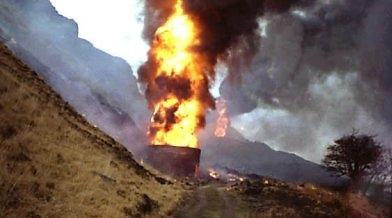
At its height flames shot 500ft into the air from the tunnel’s ventilation shafts and dense black smoke billowed high into the sky.
Inside the tunnel, between Todmorden and Littleborough, temperatures reached an astonishing 1,530 degrees Celsius.
Around 160 firefighters from West Yorkshire and Greater Manchester fought the blaze; 170 people were evacuated from their homes in nearby Walsden; and 60 workers were sent home from an engineering works at the Littleborough end of the tunnel.
The Leeds to Manchester railway line was closed for eight months.
Yet amazingly no one, neither railway workers nor firefighters, was hurt and the 143-year-old tunnel - built to last - survived the intense heat remarkably well.
A routine freight trip by a locomotive with 13 tankers - each carrying around 64 tons of petrol - had been en route from Haverton Hill, near Middlesborough, to Glazebrook, near Warrington. Several such trips took place every week.
But half way through the tunnel, at about 5.50am, a roller bearing in the forward axle of the fourth tanker failed, causing the axle to break. The tanker was derailed and the damage this caused to the track caused the following wagons to also become derailed.
Fire broke out almost at once and the crew, driver Stanley Marshall and guard Graham Broadbent and guards inspector Stanley Smalley - who were travelling in the diesel locomotive’s rear cab - climbed down from the loco.
Initially the fires along the track were small and at 8.40am the crew, accompanied by firemen, entered the tunnel and uncoupled the loco and first three wagons, which were able to be driven away.
But an hour later the fire developed rapidly, fed by petrol leaking from the tankers.
Fire rolled along the roof and down the sides of the tunnel and up several of the 12 ventilation shafts, especially shaft No.9, which was directly over the fire. This produced the spectacular sight of flames shooting up to 500ft above the shaft and dense black smoke climbing high into the sky.
Within minutes the fire service declared the inferno a major incident and ordered everyone out of the tunnel. Halifax station officer Ralph Mallinson told the Courier it was the most frightening experience in 25 years in the fire service.
Firemen hoped that the blaze would burn itself out, but there were also fears of a giant fireball that would race out of the tunnel at both ends and set nearby houses alight.
Another possibility was an enormous explosion that might be severe enough to cause a major landslip.
Nearby residents and factory workers were evacuated and it was a full 24 hours before anyone was able to re-enter the tunnel.
The main Todmorden to Littleborough road was temporarily closed and buses stopped running beyond Walsden. The Evening Courier optimistically reported that “rail services could be disrupted for several days”.
Of the 150 local residents who were ordered to leave their homes 38, mostly pensioners, were taken to Walsden Primary School.
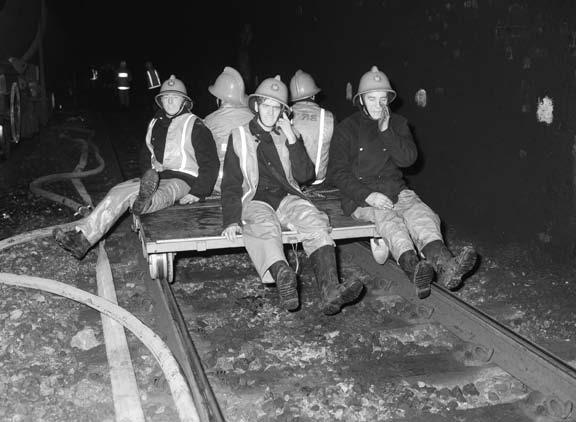
When firefighters were eventually able to enter the tunnel, they found the area at the heart of the fire still extremely hot and could feel the heat through their boots.
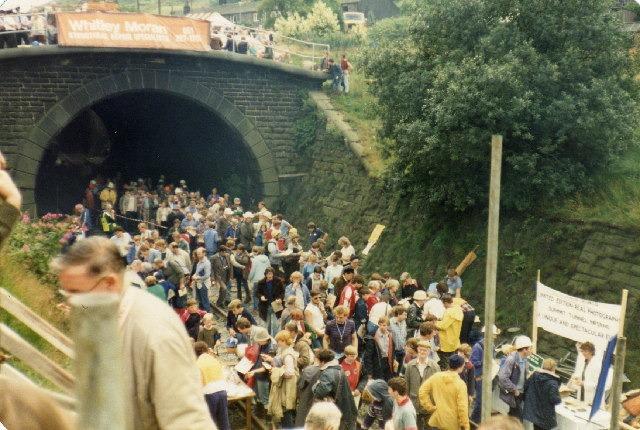
The fire was not considered to be under control until December 24 and firefighters stayed on site until the 27th, when an inspection was carried out by British Rail and expert engineers. The fire service continued to assist until January 17.
In March 1985 it was announced that the tunnel would re-open at the end of June, but it turned out that more repair work was needed and the date was put back to mid-July.
Finally the tunnel did re-open on August 19.
4. Summit Tunnel Fire
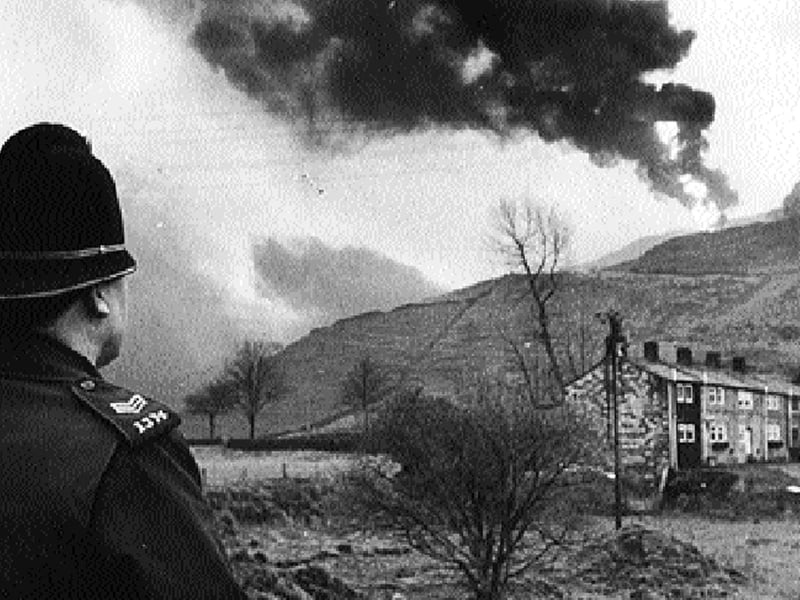
Sgt Paul Guest of Todmorden Police watches the smoke and flame rise from one of the vent chimneys Photo: National World