
BOXING DAY 2015 FLOODS: Packhorse Bridge is the defiant spirit of Calder Valley

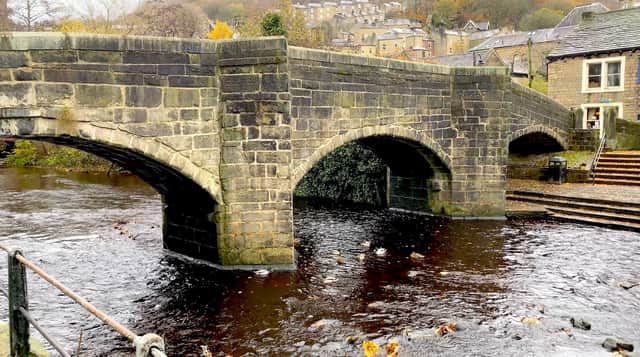
Packhorse Bridge is more than an iconic 16th-century Yorkshire landmark – it’s a monument to survival, the defiant spirit of Calder Valley no flood could ever wash away.
Weather-beaten, solid and dependable, with its three gritstone arches, bowed like a worker’s back, it is the backbone of market town Hebden Bridge.
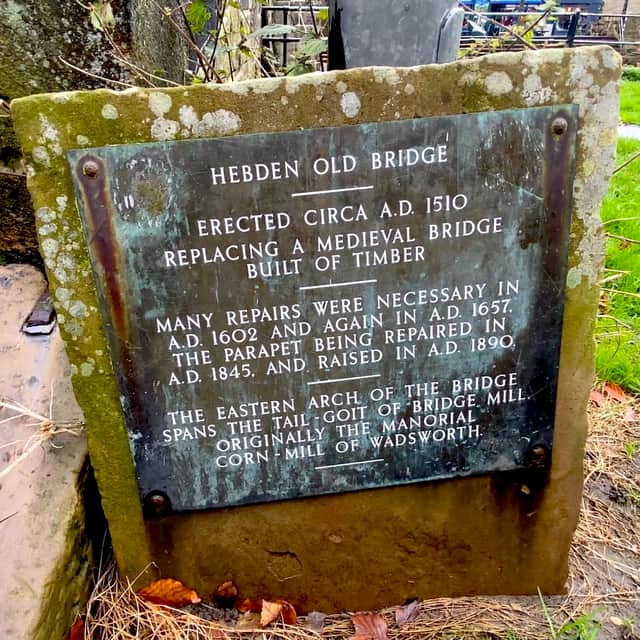
The Packhorse - also known as Hebden Old Bridge - has carried centuries of boots, hooves and history over the River Hebden since 1510.
Storm after storm has thrown itself at this thing of beauty, testing its strength and every time, just like the people who live and work around it, the bridge has held.
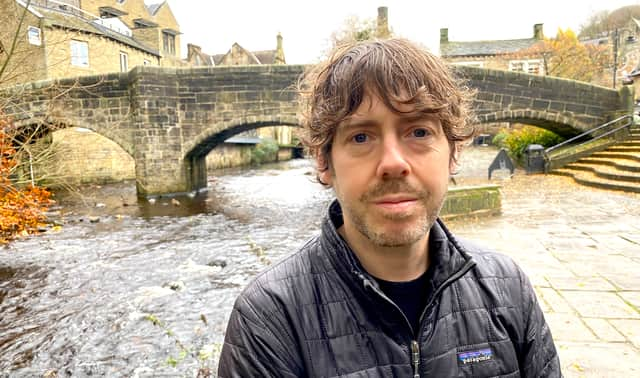

And it’s here, as the river moves steady beneath a curtain of fine rain, that Scott Patient pauses to reflect at this picture-postcard spot also known as Hebden Old Bridge.
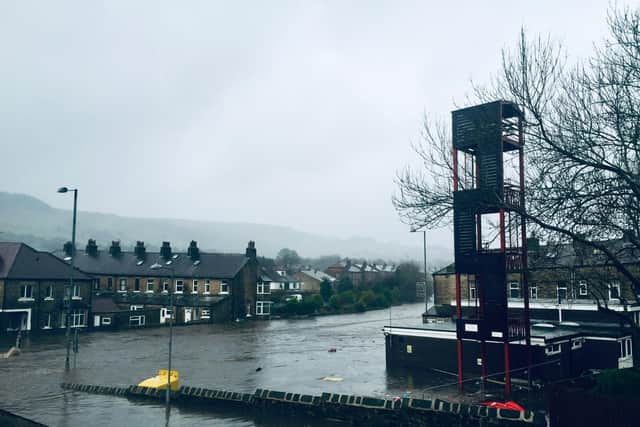
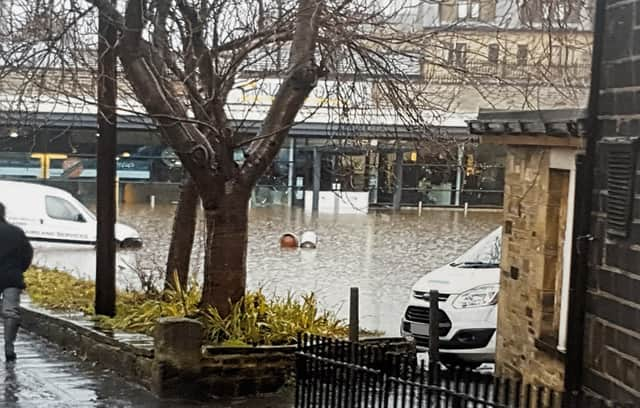
It’s hard to imagine how different this serene tourist spot looked on Boxing Day 2015 unless, like Scott, you lived through it - when the Calder Valley was nearly swept away.
But like the Packhorse, the people held strong.
Scott wasn't a councillor or a flood warden at the time. He is now.
The desire to help his neighbours drove him on and he's now Deputy Leader of Calderdale Council and a Cabinet Member for Climate Action, Active Travel and Housing.
When he shares his personal story of the floods that changed him, he doesn’t talk like a councillor giving an interview.
He speaks as a family man, proud of his community and how they have weathered every storm thrown at them — and how, together, they’ve rebuilt a valley better prepared to face whatever comes next.
"Packhorse Bridge is probably symbolic really of who we are," he says, looking at the historic crossing.“After the 2015 floods, we had a phrase: ‘We rally in this valley.’ People came together to respond to the floods.
“We're stronger together, like our heritage behind us. But we can only take so much. So at every point we're shouting loud to make sure we get the investment needed to make sure we remain resilient."
Scott, aged 45, a father of three, has lived in the neighbouring village of Mytholmroyd for 18 years.
The floods brought devastation to the entire region - he admits it felt biblical, like living in a disaster movie.

"Thinking back to Storm Eva and the 2015 Boxing Day floods, my memories are really of the fear, anxiety and worry," he says.
"When we saw how high the water was, when it reached our houses and my kids' school, it felt like something out of a disaster film, but it was happening to us.
“The force of water started lifting cars, containers and wheelie bins. Buildings fell into the river itself as well. It felt biblical."

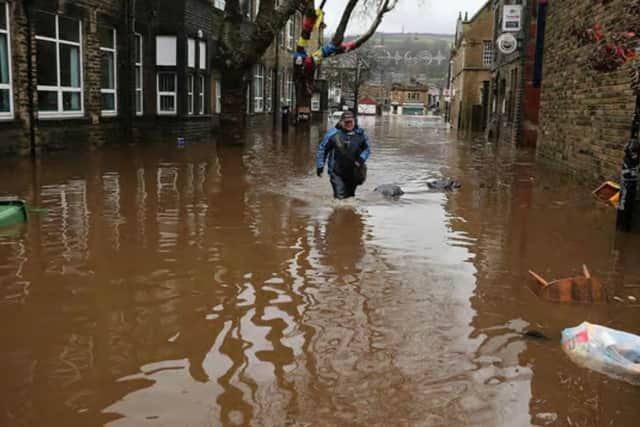
He adds: “No one had ever seen it flood like that before. It felt like the whole valley was being subsumed by this water - pouring out of the river, out of the canal, into people’s homes, schools, businesses and livelihoods.
"It was the dead of winter. The water was brown, murky and full of effluent. What it left behind took weeks and weeks to clear up.
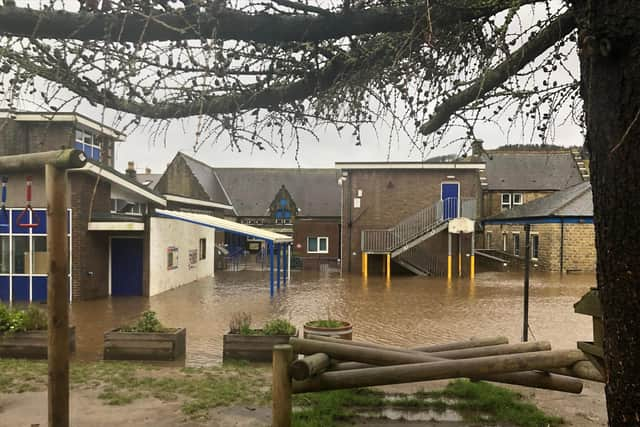
For Scott, the impact was both personal and communal.
"My house was relatively unscathed, but my neighbours weren’t so lucky," he says.
He still gets goosebumps recounting how he helped other parents and teachers to throw away flood damaged school work, musical instruments and the likes into a skip at the school his children attended, at Burnley Road Academy in Mytholmroyd - where late poet laureate Ted Hughes was once a pupil.
That experience changed him.
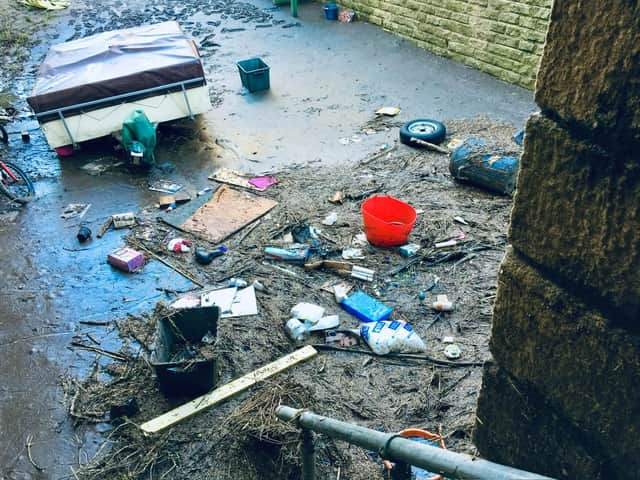
"You don't really recover from that," he adds. “Seeing what happened to my community made me want to stand up and do something. I wasn’t a councillor or a flood warden then. I was a school governor but it made me, and countless others, want to get involved and do what we can for our community.”
Before the floods, there were just three flood wardens in Mytholmroyd.
“In the days and weeks after, there were around 30,” he says.
“That just shows the impact - people wanting to be part of the solution.”

For Scott - and for many - Boxing Day 2015 was a turning point, when the valley realised that resilience couldn’t rely on luck, or charity, to recovery alone.It needed something more. And it got it.
Tens of millions of pounds have been invested into flood alleviation schemes - one in Hebden Bridge is about to start.
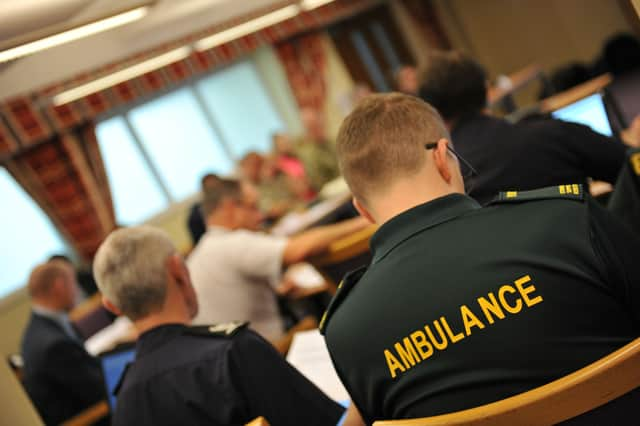
Agencies are working better and smarter together.West Yorkshire Prepared, the region’s Local Resilience Forum, strengthened its multi-agency role, speeding up data between emergency services, councils, health, flood specialists, utilities and infrastructure operators.
Calderdale Council urges residents to check Eye on Calderdale – a one-stop website for flood alerts, action plans and advice at www.eyeoncalderdale.com.
Yorkshire Water has significantly strengthened and modernised its approach to flood resilience, including hundreds of thousands of monitors within the sewer network.It has shifted towards a predictive, prevention-focused strategy, using real-time data, improved forecasting to identify and reduce flood risk and using natural processes, collaborating with Calderdale Council, the Environment Agency and West Yorkshire Prepared.
Yorkshire Water does not claim it can prevent flooding. But its ability to anticipate, manage and reduce flood risk has advanced substantially since 2015.
Emma Brown, manager of strategic partnerships, at Yorkshire Water, said: “The aftermath of 2015 floods brought a range of key stakeholders together to work in partnership on a variety of strategies and techniques to reduce the risk of flooding in the future.
“Part of that work is real-time data, storm forecasting and work on the hillsides to slow the flow of water down into the valleys. Flood resilience starts on the hills. Everything that ends up in Hebden Bridge, Mytholmroyd or Brighouse begins up on the moors.
“By working in partnership with local groups, volunteers and other key stakeholders we are using nature-based solutions - re-wetting peatlands to hold water like a sponge, planting trees to stabilise soil and slow run off, creating leaky dams and natural channels, restoring moorland - so rain doesn’t rush straight downhill.
“We’ll never eliminate flooding - no one can. But by working together in partnership, we can all help to reduce the risk better than ever before.”
As he glances back at the Packhorse Bridge, Scott smiles.The Boxing Day floods changed everything - for Scott, for Calderdale, and for the way Yorkshire faces its future.
The valley may still live with risk, and the river may rise again — but its people, like the Packhorse Bridge itself, remain unshakably strong.