
"A lot of things were made in Halifax in my managerial career" - Chris Wilder on Town's 2006 play-off final, fighting for survival and the club's demise
In the second part of the Courier’s special in-depth interview with former Halifax Town manager Chris Wilder, he looks back on the club's play-off final in 2006, their subsequent relegation fight and the battle to keep the club alive.
After nearly four years of hard graft, Chris Wilder had dragged The Shaymen to within touching distance of promotion in his first full-time managerial role.
Against the odds, Town had clawed their way to the play-off final, with one hurdle remaining between them and the Football League.
"We worked hard. We had a fabulous home record, I think we got beat on our final home game but we'd been unbeaten at home up until then," Wilder reflects.
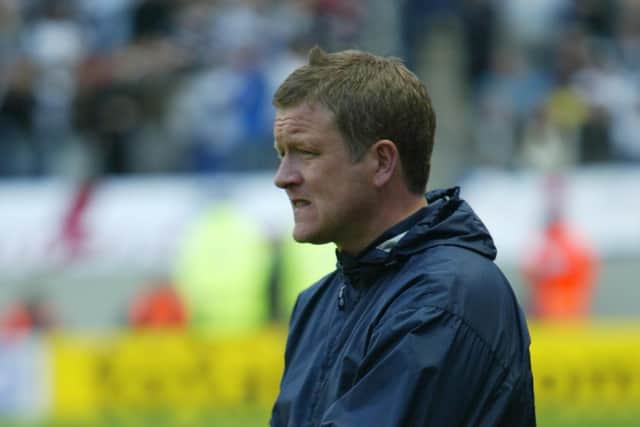

"We beat the favourites to go up in the semi-final, Grays.
"We had a really good mix. We had some good young players that we'd signed, some on loan and some permanent.
"And we had some good experience as well, boys like Craig Midgley, John Grant, Ryan Sugden, Peter Atherton and Wayne Jacobs.
"But we wanted to finish the job in the final.
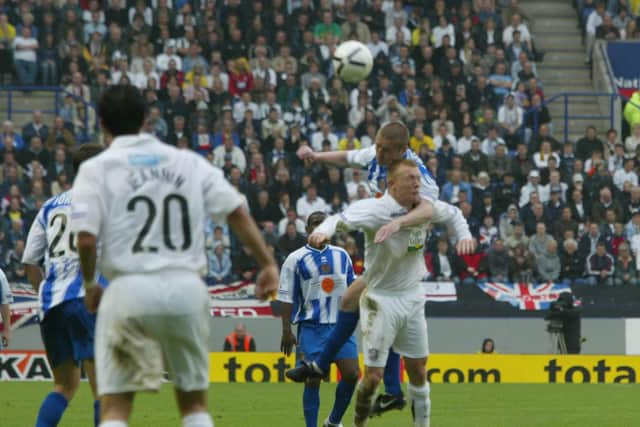
"My masseur at Sheffield United is Chris Senior, who played for us in that game, and we talk about it all the time.
"We had a penalty shout, we had a goal that was onside ruled offside and then we got done in extra-time.
"It was soul-destroying because of how close we got and we knew we had to go and do it all again.
"It was a really painful one because of how good we'd been all season, and it had been against odds, yet again.
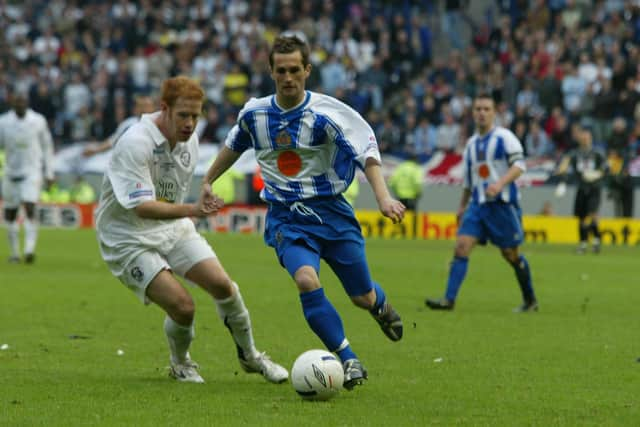
"That always seems to have been a tag that Halifax have had right the way through their existence.
"If they've ever had success, it's not been handed on a plate to them.
"It was difficult for me as a young manager to go through that experience and to go again.
"We lost some players after that and there was still the backdrop of the stadium and the issue with the builders, and there was still the backdrop of the financial situation.”
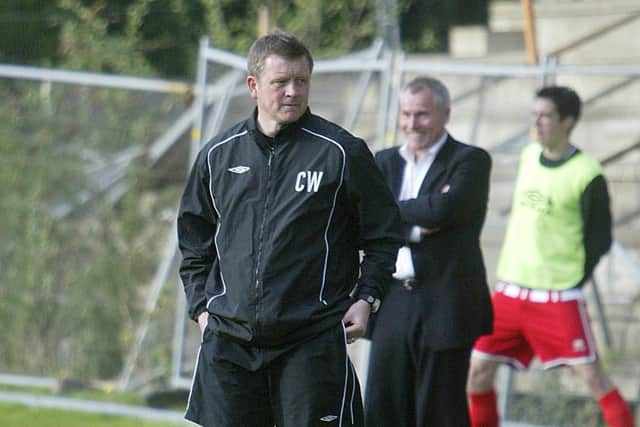
After flying so close to the sun in 2006, the cold, hard reality of life after the play-off final began to bite.
Wilder says the cloud of administration was hovering over the club for about five years.
"We were always close to the edge," he recalls, "it was always a massive struggle, paying bills and running an incredibly tight ship from a budget point of view
"There was loads of times when it got close.
"Towards the end of my time there, David Bosomworth came in and the club had a decision to make.
"I got on really well with David and had positive talks with him.
"We were in a decent position, just outside the play-offs and the owner said 'to put this to bed once and for all, we have to go into administration', which really killed our season.
"We had to take a ten-point hit. The effect that had on everybody was catastrophic, it really put us on the back foot.
"We had a massive struggle off the back of that, but I was told by David and the owners that it was the only way we were going to protect the long-term future of the club, and that if it hadn't gone into administration, there was no way it was ever going to progress.
"It wasn't my decision, but the decision was made and you have to get on with it."
Halifax finished 16th in 2006-07, suffering the mother of all play-off hangovers, before pulling off a last-day survival escape the following campaign.
"It went to the last game of the season, which was at home, and I always remember the feeling of staying up," says Wilder.
"It just felt like a huge moment, that we'd managed to preserve full-time football at The Shay and preserve our Conference National status."
Things are rarely that straightforward at Halifax Town though.
"The talk from administration, right the way through, was that a deal would be done," says Wilder.
"The message was 'we're going to take a ten-point deduction but everything will be fine for next year, clear the debt and we'll rebuild and be really competitive'.
"We'd been playing in that ground for over five years with the stand being derelict.
"I remember the day of the meeting of the administrators regarding coming out of the CVA, we were all sat in the changing room.
"We were all saying our goodbyes for the summer and talking about pre-season.
"Then I got a call from the club secretary at about two o'clock saying 'I've got some really bad news, the people that are owed money haven't accepted and they're going to close the club down'.
"And you're like 'what?'.
"And the secretary said 'everybody's out of work, all contracts are cancelled apart from people that were assets'.
"There were two or three assets in the eyes of the administrators, there was Jon Shaw, there was me.
"But all the players they didn't think were assets to the football ciub, they had their contracts cancelled.
"So all of a sudden, I had to walk back into that room and say 'I've got some bad news, you're all out of work and your career at Halifax Town is no longer'.
"I've not really thought about that, you sort of get on with your career and your next challenge.
"But thinking about it now, it's just horrific. Absolutely devastating that I'm having to go and tell all these players that the contracts we were potentially giving out are no longer there and you're on the dole.
"The supporters no longer have a football club to watch, all the staff are getting made redundant and the club is no more.
"We were all confident that people would look at the bigger picture, the amount of people we employed.
"We were trying to give young footballers a future in the game, we had football in the community, we went round schools, we had office staff.
"And somebody's decided 'I'm not going to take that offer, I'm going to put the club to the wall because I got stiffed six years ago, and I had to make those decisions you're making now, so now it's roles reversed'."
After six years of sweat and toil, ups and downs, grit and determination, it was all over.
"I had four or five opportunities throughout those six years to go and work elsewhere, but I bought into it," Wilder says.
"I gave everything to it and I met some fabulous people through it.
"I coached some great young players, the supporters were always fair to me, even though sometimes they might not have understood the severity of it.
"When that final decision was made, I'd imagine 99 per cent of them were shocked and stunned in terms of how it had materialised.
"Had it won an FA Cup or been in the top division? No, but it's the town's football club.
"Regardless of whether there's 1,500 there or 15,000, those supporters loved the cub and they kept it alive every other week by going to The Shay to pay their hard-earned money to watch their team."
And Wilder, more than anyone, was responsible for restoring some pride and passion onto the pitch after the club's relegation in 2002.
On his happiest memory at Halifax, Wilder says: "I think the first game at The Shay, after the club had come out of the Football League, and putting a team together.
"Winning that first game of the season and seeing supporters knowing that the club's alive and kicking.
"There are great memories of the team that reached the play-off final too, it was a great journey through that season.
"It was a mixed bag, it wasn't all great and there were some dark times in there that you had to plough through.
"But working for people who wanted their club to be around was good enough for me.”
Wilder says his time at Halifax was "huge" in his development as a manager.
"But it makes you tougher, makes you streetwise, hardens you up,” he says.
"For me, from where I was as a manager then to where I am as a manager now, I've always kept my eyes and ears open, I've always listened and tried to learn and improve.
"Even through bad spells in seasons, (learning) how do you react to disappointment, how do you react to a disappointing season, how do you react to a disappointing spell.
"I've had a couple of spells as a manager that didn't go as well as I'd have liked, but I've learned from them and took that experience forward, and tried not to make the same mistakes.
"You sometimes do, but if you're not dumb, you want to learn from experiences and use them to the benefit of your career going forward, and that's what I've tried to do.
"But for me, a lot of things were made in Halifax in my managerial career."