
Story of Calderdale village told through 100 objects
The vibrant past of a village is being told through a new display.
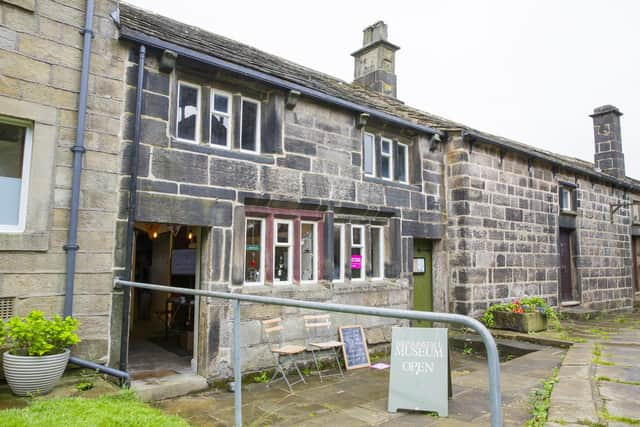
Following a six-month closure, the much-loved Heptonstall Museum has re-opened, and an exciting new exhibition promises to intrigue visitors.
Months of work have gone into the re-opening, which has been co-ordinated by the Friends of Heptonstall Museum group, involving researching, compiling and preparing more than 100 objects.
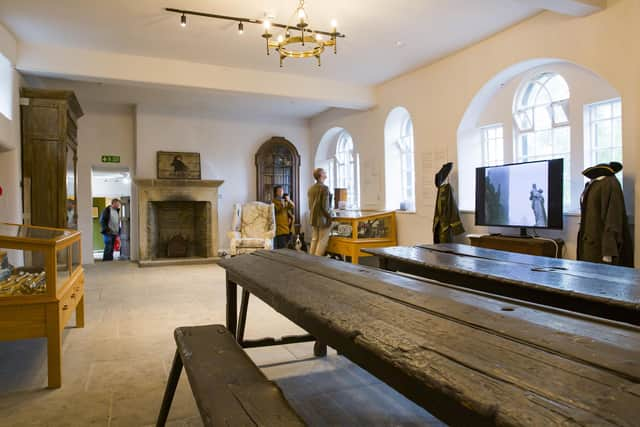
Among them is the original furniture from when the building – built in 1600 – was used as a grammar school.

When filming took place inside the museum for The Gallows Pole during the pandemic, the furniture had to be hidden away, and the film crew built an extra wall at one end of the museum to hide it.
The wall later proved difficult to remove, and the furniture has not been seen by the public for around five years.
Now back on display, visitors will be able to see carvings in the work benches from some of the grammar school’s more defiant schoolchildren.
The building operated as a school between 1642 and 1889, and in 1825 was visited by Anne Lister, who wanted to see if the school would be suitable for her friend’s child.
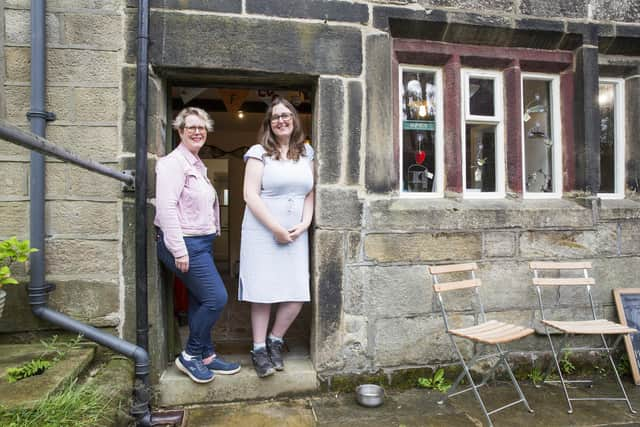
Friends of Heptonstall Museum trustees, Nicola Jones and Nick Wilding, said the new exhibition is as much about the stories behind the objects on display, and helps to tell the stories of all the people in the graveyard outside the museum.
The objects range from a Roman coin, right through to costumes from film productions done at the museum in recent years.
They said: “It’s 2,000 years of objects that have had some relationship to Heptonstall.
“And the stories that come with those objects, because there’s thousands of people in the graveyard, and it’s their story. We’re reflecting their lives.”
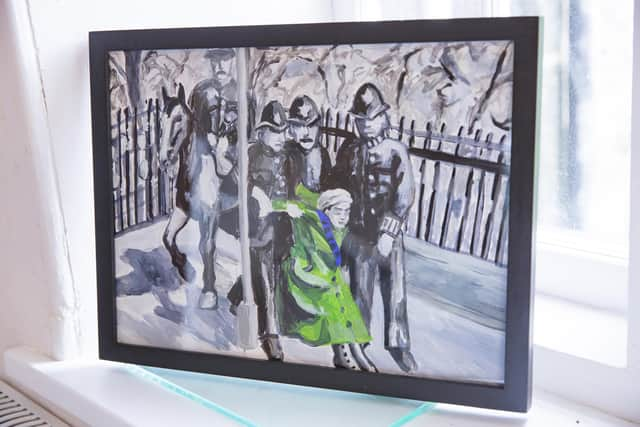
Nicola said a “lovely addition to the collection” is a painting of Heptonstall suffragette, Lavena Saltonstall.
The painting, created by local artist Tracey McVann, was specially commissioned for the exhibition, after the museum found there were no known images of the suffragette.
“It’s nice to have something that represents the work that she did,” Nicola added.
Elsewhere in the exhibition, visitors can don a pair of headphones and hear audio recordings depicting the language and dialect of the local area and how life was lived in earlier times.
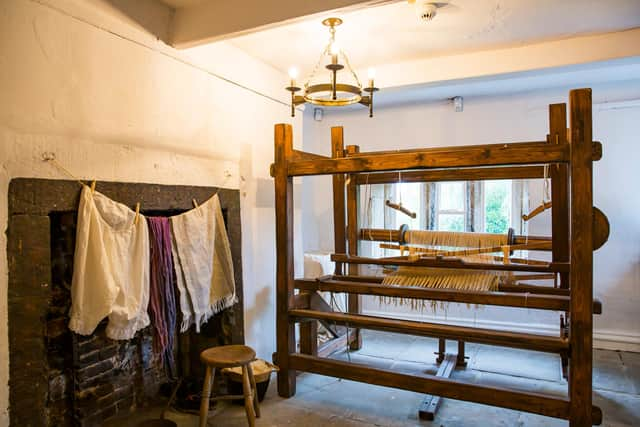
One recording depicts life described by local weaver Old Tom.
The interview was notated at the end of the 1800s and provides a clear memory of home life in the early 19th century before that way of life became obsolete.
Old Tom’s memories were later recorded at the end of the 20th century by another villager, who was directed to read it in the correct dialect and pronunciation by one of the last people with knowledge of how it should sound.
A second audio recording allows visitors to hear an interview conducted by the BBC in the 1950s with local character Hollins Smith, who was a farmer at Black Dyke Farm and renowned for his storytelling as a regular at the Cross Inn.
The interview captured the dying dialect of Yorkshire before it disappeared.
A couple of items in the exhibition pay homage to the village’s Methodist church, which was built in 1764, such as an interactive model of the church which visitors can make light up and play music.
The chapel – according to Calderdale Heritage – is the oldest surviving octagonal preaching house in the world, and was extended in 1802 to increase capacity.
An illustration on display as part of the exhibition, created around the time the chapel was built, depicts the building in its original, symmetrical shape, and is thought to be the only existing drawing of the chapel in this original state.
Nicola and Nick thanked the community for helping to put the exhibition together: “So many people have actually lent their stuff to us, and this is a community venture, and it couldn’t have existed without all those people who put their trust in us to tell their stories with their prized possessions for people to see.
“It’s such as historic place to visit, and bringing a bit of the outside in, I think is quite a nice thing to do.”
The “Heptonstall’s Hundred” exhibition is open weekly at the museum from Friday to Sunday.