
Local Plan: Clash over number of new homes needed to be built in Calderdale
A clash over the number of new homes needed in Calderdale in the coming years also showed how much housing a council expects to see built annually into the early 2030s.
Calderdale Council adopted its Local Plan – successive governments require every local authority to have one – in spring 2023, amid controversy about the numbers and loss of green belt land.
At a public question time session with senior councillors, campaigner against the plan Anthony Rae said community groups opposed to building 15,000 new homes – “the area of 500 plus football pitches of green belt” – had argued this was not justified because Calderdale’s population had stopped growing and these numbers were not needed.



But Leader of Calderdale Council, Coun Jane Scullion, said projected numbers of homes would need to be built and reflected the new government’s ambitions for housing.
Mr Rae said the council’s numbers were crunched on the basis of wanting to increase local jobs numbers by 10,000 and some of these requiring new homes.
However, two years on, Office for National Statistics figures indicated “the community groups have been proved right and the council was spectacularly wrong,” argued Mr Rae.
“Calderdale’s population in 2032 will be the same as it was in 2018, employment levels have fallen, not increased and the district’s actual housing delivery rate remains way below the Local Plan trajectory,” he said.
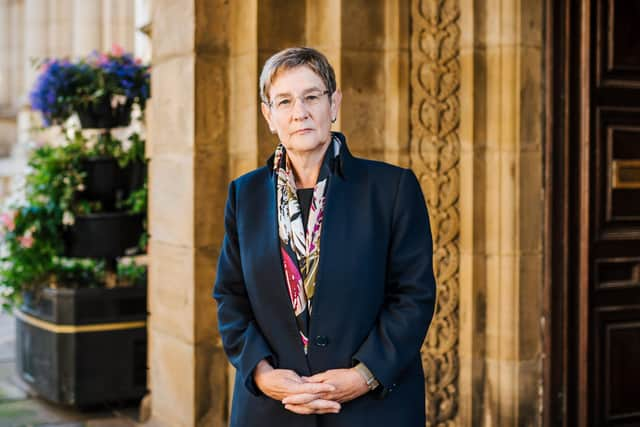
Mr Rae said employment levels had fallen, not increased, and the actual housing delivery rate was “way below” the Local Plan’s trajectory.
“Will the council agree to start the Local Plan five-year process with a consultation in 2026 that acknowledges the real world trends affecting the population, employment and housing delivery numbers, and allows a critique of the underlying modelling approach which generated this extraordinary cock-up for Calderdale?” he said.
He said the council’s core strategy for housing was based on “fantasy numbers”.
But Coun Scullion (Lab, Luddenden Foot) said she refuted that notion “entirely” and council officers had told her Mr Rae’s question was predicated on a misreading of national planning policy as it existed at the time of the Local Plan examination and as it is now.

She said the new Government’s standard methodology, introduced late last year, moved away from using population projections, instead focusing on existing stock and affordability.
Only 1.6 per cent of Calderdale’s green belt was affected, she said.
The Local Plan’s annual housing requirement was close to the new methodology’s requirement for Calderdale, said Coun Scullion, meaning in its first period, 2018-25, there were 500 new homes built per annum.
This would rise to 950 a year between 2026 and 2028 and up to 1,810 new homes a year from then to the end of the Local Plan’s time-frame in 2033, the latter period coinciding with thousands of new homes in south east Calderdale near Brighouse coming on stream, she said.
Coun Scullion said: “We’re in danger of having an increasingly ageing population and a situation of stagnancy in terms of lack of growth – in housing, Council Tax, lack of growth or indeed sustainability in our schools, particularly our small village schools, in our towns, in our retail sector.”
And the council was required to follow national planning policy, she said.