
Park under the flyover, more people living in town centre and other plans for Halifax by 2036
A new park under Burdock Way and bringing Halifax’s historic ‘Streets in the Sky’ homes back into use are all part of a vision drawn up for the town.
Halifax 2036 Place Vision also suggests homes could be built at Dean Clough as part of a drive to see more people living in Halifax town centre.
The proposal, setting out a way a way forward for the town over the next decade, was adopted by the council’s cabinet at the start of the year.
The council says it was shaped by what residents and local organisations said was important to them and identifies actions to support the council’s priorities for “thriving towns and places, to reduce inequalities and to take action to tackle climate change”.
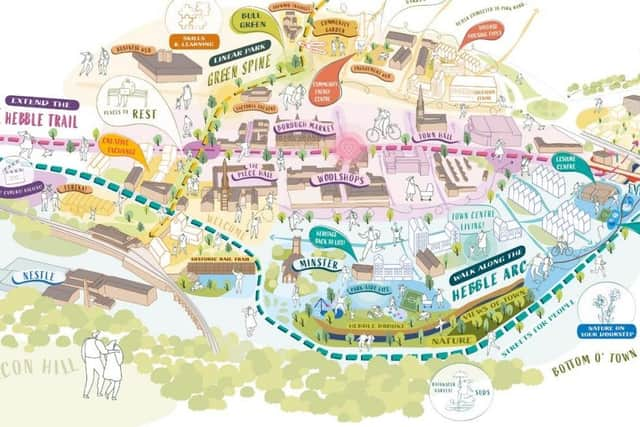

One of the aims is to increase the number of people living in the town centre, with the vision including “creating low-carbon communities close to services, amenities and public spaces, supporting a vibrant and bustling town centre economy and making effective use of brownfield sites and existing buildings”.
There is a suggestion that a feasibility study should be carried out into bringing the two “secret streets” that run above Halifax Borough Market back into use.
Tours are currently carried out so that people can see the hidden homes but the vision’s aim would be to review issues such as drainage and fire safety to bring these dwellings “back into beneficial use and assess options for potential future purposes with a residential focus”.
An art installation below North Bridge is suggested “to uplift the area and encourage people into the area”.
The vision says: “Next steps could include pop up cinema, fairground or art workshops to build the connection to Dean Clough and improve the safety and perception of the area.”
And under the fly-over, there could be a new park: “An under-flyover public park and event space has the potential to connect the new leisure centre, Dean Clough and the town centre, featuring creative art installations, wayfinding to nearby heritage sites, and adaptive reuse of the car park to host pop-up events and a range of play areas to cater for different age ranges, linked to the leisure centre,” says the document.
The document also highlights the ‘Hopwood Lane Triangle’ – the gateway between the residential area of West Central Halifax and the town centre which also links the centre to Calderdale College, People’s Park, and the Elsie Whiteley Centre.
"With numerous historic buildings in and a sustainable location, there are pockets of underused land, and many buildings are in poor condition,” says the vision.
"The opportunity is for mixed use development including new homes, commercial development and community facilities.
"This will require overcoming fragmented landownership, and viability challenges, and improving the public realm that integrate with the improvements around Bull Green and Cow Green.”
And there is a suggestion to “uncover and re-naturalise” Hebble Brook to create an area for local habitat and wildlife, a new amenity asset for residents and visitors to enjoy ~”and the focal point for a healthy new neighbourhood at the bottom of town”.
The vision says: “The re-naturalising project would deliver natural flood water management systems around the brook, futureproofing the bottom of the town against the impacts of climate change.”
Under “ongoing activity” the document also says: “Work is progressing on a Dean Clough masterplan, with aims to consolidate parking and develop new homes.”
The vision highlights the town’s strengths, including its kind, diverse, innovative and creative residents who form an “engaged and active community”.
It also highlights the town’s thriving economy, stunning natural surroundings and impressive historic environment.
"Halifax has a unique and fascinating history, ready to be told through creative interventions and community initiatives,” it says.
But there are also challenges to tackle, says the vision.
These include an aging population, the Town ward being within the most 10 per cent of deprived neighbourhoods and a lower-than-average number of people with academic qualifications.
The number of empty retail units has risen and there is risk of flooding, it adds.