
Snow watch: Gritting pavements in Calderdale this winter could cost council an extra £1m
Gritting pavements across Calderdale would be likely to add between £500,000 and £1 million in costs, councillors heard.
The issue was one raised by councillors debating an overview of winter preparedness and at a time of a challenging budget position.
Depending on weather severity, it has cost Calderdale between £500,000 and £2.8 million – the most a winter has cost the council – to salt the area in recent years.
They heard the council’s own weather station at Pecket Well, above Hebden Bridge, provided up-to-the minute information about Calderdale with regular updates, detailed information and real-time illustrations of changes in road temperature, for example, available.
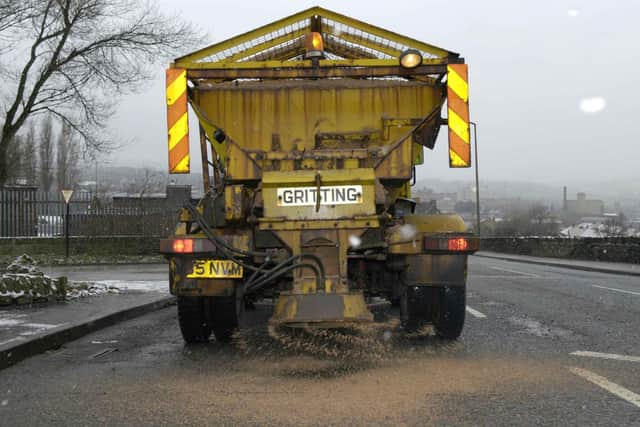

Technology – monitoring is enabled 24 hours a day – allows the council to view thermal imaging of Calderdale’s roads, enabling it to grit smaller amounts on different parts of the network, producing cost savings.
Also able to access reports from neighbouring areas, timings of what needs gritting and when can also be adjusted, Place Scrutiny Board councillors heard.
The council’s new salt barn also allows salt to be used more by cutting out loss to rain-wash.
Coun Dave Young (Lab, Calder) said for the first year in a dozen he had not received one email about non-gritting and asked if it had been milder – officers said it had been relatively average and added it was extraordinary snow events which led to more calls.
Coun Joe Thompson (Lab, Town) asked about possibility of providing grit bins for unadopted roads and Coun Audrey Smith (Lab, Sowerby Bridge) believed more pavements should be gritted.
But officer Jonathan Cole said in the case of the former money provided was purely for adopted roads although where emergency services requested something clearing it was done – otherwise anyone buying a home on an unadopted road would need to factor maintenance into their budgets.
In the case of pavements, there was some hand-salting in Halifax and sometimes some “reactive” gritting but it could cost between £500,000 and £1 million extra of Calderdale were to start gritting pavements more generally.
Coun Sue Holdsworth (Lib Dem, Greetland and Stainland), Coun Tina Benton (Con, Brighouse), Coun Joe Atkinson (Con, Hipperholme and Lightcliffe) and Coun Stephanie Clarke (Lab, Illingworth and Mixenden) asked questions about the technology and how criteria for where and what was gritted, for example in areas where there might be more older people.

Councillors were shown a chart detailing how this is decided and worked out, right down to how much grit was used and how often depending on the different conditions.
According to the council’s website, the authority’s winter policy gives priority to high use roads. Also, roads that access community facilities, such as hospitals, schools and shopping centres.
In severe weather, the priority for snow clearing work is:
A roads.

B roads.
Rest of the priority network.
Clearing and removing snow from roads depends on the amount of snow and the conditions at any time.
Cabinet member for Public Services and Communities, Coun Jenny Lynn (Lab, Park) told the meeting it was only a few years ago that a lot of detailed work had been done to define the criteria and it would be unfair to ask for that to be done again so soon.