
Soccer Siftings: The story of the original Freddy Fox
In the latest part of his Soccer Siftings series for the Courier, Halifax Town historian Johnny Meynell delves into the story of Freddy the Fox.
It was a random question posed on social media by former Town goalkeeper keeper Darren Heyes which started a conversation as to why the Halifax Town had adopted a fox as a mascot.
Perhaps he ought to have known, for he was at the club, and, indeed, played in the match against Altrincham on 16 March 1996 when the mascot fox – then without a name – appeared for the first time.
To fans of other clubs, a fox would seem an unlikely animal to adopt as mascot, particularly as there seemed no real link.
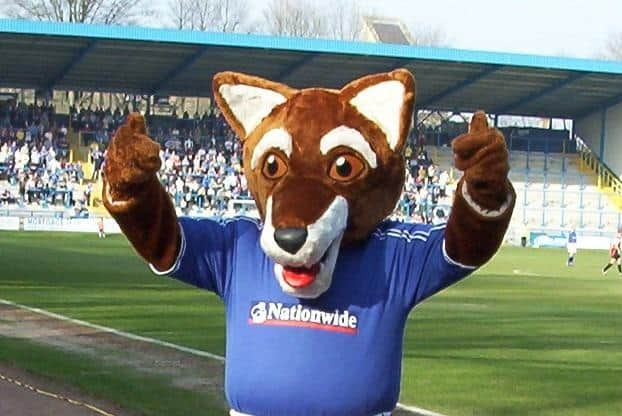

One could see reasons being Sheffield United’s Captain Blade or Cyril the Swan for Swansea City. But a fox for the Shaymen?
There was, of course, a story to it, though nothing particularly untoward or exciting.
The story broke in the Halifax Courier on 22 February 1996, when Nick Grainer reported how holes had appeared in the centre circle of the pitch.
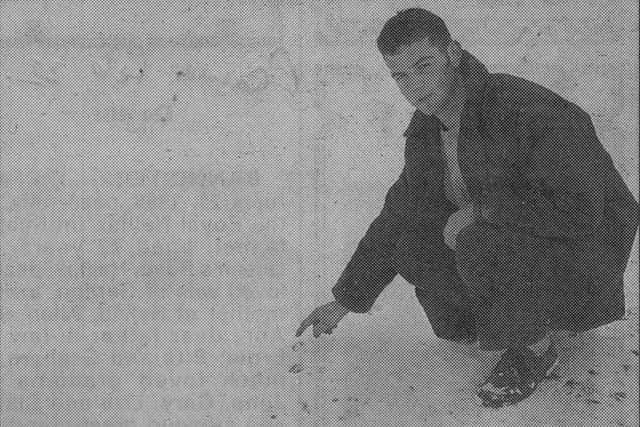
Then groundsman Phil Garside admitted to having seen a fox cross the pitch looking for food, but the footprints left in the snow were what really incriminated it.
No one was unduly concerned, with chairman John Stockwell believing the fox really was a Town fan.
There is no evidence, however, to suggest the holes the fox had dug were in any way to help with potential drainage issues.
It was at this point that the club decided to adopt a fox as club mascot, and Town fan David Wells, who, with wife Lilian, worked tirelessly on behalf of the club over the years, donning the original fox outfit.
It looked a somewhat bland-looking object, even after being kitted out in the Shaymen’s colours.

In a scenario comparable to that of Bungle Bear from the TV show ‘Rainbow’, where the original looked really frightening and had the potential to scare off the children it was supposed to be entertaining, the original fox outfit was replaced by the more familiar one we see today.
Several weeks after first appearing at The Shay, the mascot was christened Freddy Fox and he became a fixture at home games for many years, though over time with different incumbents, evidenced by the fox’s ever-changing waistline, slim-line or portly, depending upon who was inside the costume at any given time!
Freddy Fox became synonymous with the Shaymen, a local celebrity of you like, waving to the fans and dishing out sweets, but it was in September 1999 that he hit the national headlines following a half-time spat with Rochdale mascot Desmond the Dragon, aka Patrick Robinson.
The pair had walked around the pitch together waving at the supporters, but it was Freddy’s habitual instinct of cocking his leg on one of the goalposts in front of the Rochdale fans that so got up the goat of Desmond.
He proceeded to goad Freddy, and despite being warned off, proceeded to bop our fox on the nose before retreating.
Freddy was invited onto the Granada Tonight regional news programme to give his version of events, whilst Robinson was duly dismissed by the Rochdale club.
Whether there was any previous knowledge or historical thought gone into the naming of Freddy the Fox, no one can be sure.
It just seemed to be a name that suited. But whilst Freddy has been around for nearly thirty years, he was, in fact, not the first Freddy Fox to have trodden the Shay turf. Did anyone realise?
Back in June 1927, goalkeeper Fred Fox joined the club from Millwall, seen as a successor to Manchester City bound Lewis Barber.
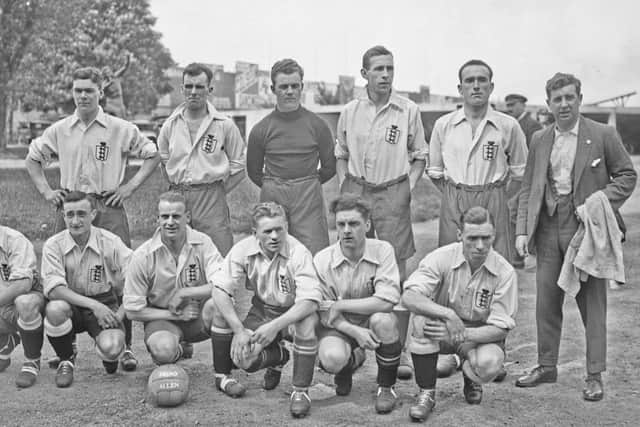
He was, in anyone’s books, quite a catch. After all, Fox was an England international, even if his total of caps amounted to just the one.
He had been performing well enough for Gillingham, then playing in the Third Division (South), when international recognition came calling, and he was chosen for the friendly with France in Paris on 21 May 1925.
This at a time when goalkeeping contenders included Dick Pym and Sam Hardy, as well as Huddersfield Town’s own Ted Taylor.
By the time Fox got to make his international debut for the friendly with France, he’d become a Millwall player, yet still to turn out for his new club.
But it was a debut which didn’t exactly go to plan.
Though England won the match 3-2, played at the Olympic Stadium at Yvres-du Manoir, Colombes (which, incidentally, will stage hockey at this year’s Olympic Games) Fox was forced to retire in the 76th minute after receiving a kick to the face in a goalmouth melee when France scored their second goal.
He was forced to leave the field, and with William Walker replacing him between the sticks, England played out the remainder of the match with only nine men following first half withdrawal of centre-forward Viv Gibbins, who had opened the scoring, with a wrenched knee.
Born in Highworth, Swindon on 22 November 1898, Fox progressed from junior football in Swindon before being signed by Swindon Town at the end of the First World War, honing his craft with the reserve string.
In January 1921, he sought first team football with Southern League side Abertillery before being signed by First Division Preston North End, initially on a month’s trial.
He made his League debut in a 1-1 draw at Manchester United on 1 October 1921 but was one five goalkeepers used that term by the club.
Hopes of a return to the first team were hampered when Fox sustained a broken collar bone playing with the reserves against Birmingham City Reserves in a Central League match that January, and at the end of the season he signed for Gillingham, ousting John Thompson and becoming first choice keeper over the course of two and half seasons.
In 1923-24, Fox missed just one game and the following term featured in every one of the side’s FA Cup sixth qualifying round tie with Barrow that ran to five matches, as well as representing the FA team in the annual match against Cambridge University on 27 November 1924.
Fox went on to make 106 League appearances for the Gills but had been put on the open-to-transfer list when he got his England call-up.
Fox resumed his career with Millwall, spending two seasons with the club.
He was viewed initially as first-choice keeper but he was eventually ousted by Joe Lansdale and during 1926-27 was restricted to just five first-team outings.
So, just two years after playing for England, Fox decided to throw in his lot with Halifax Town, and appeared in the first seven matches of the 1927-28 campaign, helping the side rise to third in the table.
But following a 3-1 defeat at New Brighton on 17 September 1927 it was suggested Fox had suffered a loss in confidence and he was replaced in the side for the visit of Darlington by Jack Pennington, who duly took his chance.
Fox was kept out of the first team until the New Year, reappearing in the side for the visit of Nelson on 14 January 1928, a game the Shaymen won 5-1, and enjoyed a six-match run-out.
But after Pennington had been restored to the first team, Fox expressed his wish to return to his former district, claiming the northern climate did not agree with his family.
He left the club having made fourteen League appearances and signed for Brentford in March 1928, initially acting as cover for Harry Bailey.
He claimed the keeper’s jersey and in 1929-30 was ever-present as the Bees finished runners-up to Plymouth Argyle in the Third Division (South).
Fox left Griffin Park in September 1931 after becoming the licensee of the Hope Inn, Truro, and the following month he signed for Cornish Senior League side Truro City.
In January 1938 Fox was appointed as a secondary school coach in Truro.
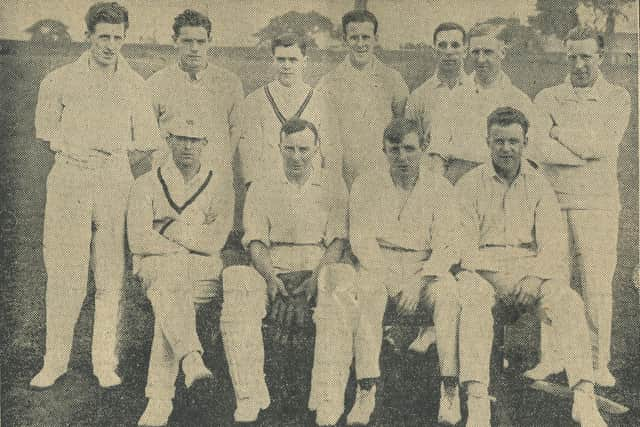
A useful cricketer with Truro who also represented Cornwall, Fox died on 15 May 1968 aged sixty-nine.