
Council leader asks Angela Rayner for powers to change Calderdale housing plan he voted for
Calderdale Council’s leader has asked Angela Rayner for powers to change the housing plan he voted for.
In a two-page letter to the Housing Secretary, Daniel Sutherland has said “we are angry” as he sought to “challenge the housing requirements imposed on our borough” and “seek changes that allow us to make planning decisions based on local evidence”.
In the letter, Councillor Sutherland – who was a Labour councillor for 15 years before defecting to Reform last year – argued development on green belt land will have “lasting consequences” for Calderdale, while sharing concerns the population forecasts underpinning the plan have been overstated.
“Why should Calderdale’s communities face the permanent loss of countryside and additional pressure on services for a level of development that local population growth does not justify?” he asked Ms Rayner.
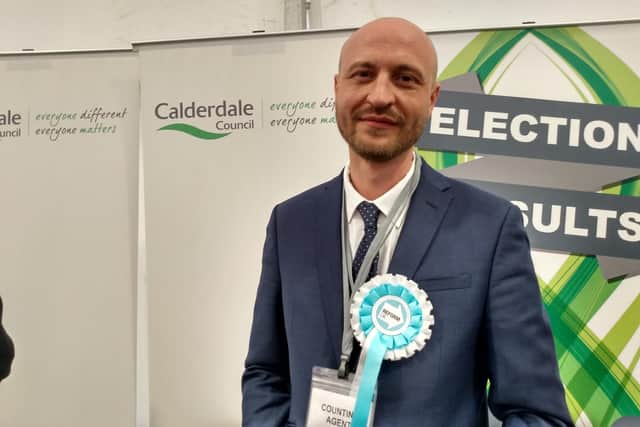

Coun Sutherland was Calderdale’s cabinet member for planning, housing and environment during much of the plan’s development and one of 26 Labour councillors to vote through the Local Plan in 2023 – despite angry protests outside Halifax Town Hall.
Having fronted council communications on the Local Plan during its development, Coub Sutherland is now seeking to revise a policy he backed.
Council press statements as the plan was being drafted in 2018 show Coun Sutherland championed an approach prioritising urban brownfield sites and keeping green belt usage to “well under two per cent”.
Public backlash over green belt allocations in the draft plan led to the council adopting a new method of working out its housing figures, bringing the housing requirement down before the plan eventually settled on a target of 14,950 homes.

But when the plan was finally adopted in 2023 – with a goal of building on average 997 homes per year to support local job creation – pressure group Calderdale Friends of the Earth (FOE) labelled it "disastrous”.
The Local Plan acknowledged population growth forecasts had fallen significantly, with 2018 ONS projections suggesting Calderdale’s population would increase by around 3,800 by 2035 rather than the 14,075 previously forecast.
Though the Local Plan argued housing need should be based on factors including household formation, affordability and economic growth rather than population change alone, FOE questioned whether the final housing target remained too high.
At the time, the then leader of the council Tim Swift (Labour) said it was “necessary to release a very small proportion of the land previously in the green belt to meet all of Calderdale’s future need for housing and jobs”.
Recent changes to national planning policy by the Labour Government have also created new routes for development on some grey belt sites, adding further pressure to communities concerned about the loss of previously protected land.
In his letter, Coun Sutherland said: “Our administration was elected with a clear commitment to challenge inappropriate development and review the Local Plan.
“Yet residents understandably struggle to see how their votes can deliver change when elected councillors are constrained by existing allocations, national policy and the risk of costly appeals.
“We are angry at the position our communities have been placed in. We are determined to challenge it, but we need the Government to give Calderdale Council the powers and flexibility to act.”
A Calderdale Labour spokesperson said the borough faces a housing crisis, with young people being priced out and thousands waiting for social housing.
They also stressed the Local Plan, formed under the Labour administration, protects more than 99 per cent of Calderdale’s green belt and that claims of wholesale development are “misleading”.
“It was adopted in 2023 following extensive consultation and independent scrutiny. Reform leader Cllr Dan Sutherland helped lead its development and voted in support of it just three years ago,” said the spokesperson.
“The plan is due to be reviewed in 2027, but that review must be based on up-to-date evidence about housing need and infrastructure. Sites cannot simply be removed by political choice; the council must demonstrate that sufficient land remains to meet housing needs.
“Residents deserve honest answers, not false promises about scrapping sites. Building fewer homes will not make the housing crisis go away.”